

Written by: Kieran Delamont, Associate Editor, London Inc. Originally published in WorkLife by London Inc.
Why your job search might look a little different in 2026
The new year ushered in new rules aimed at improving the job search experience in Ontario. Experts are divided on whether it will make a difference
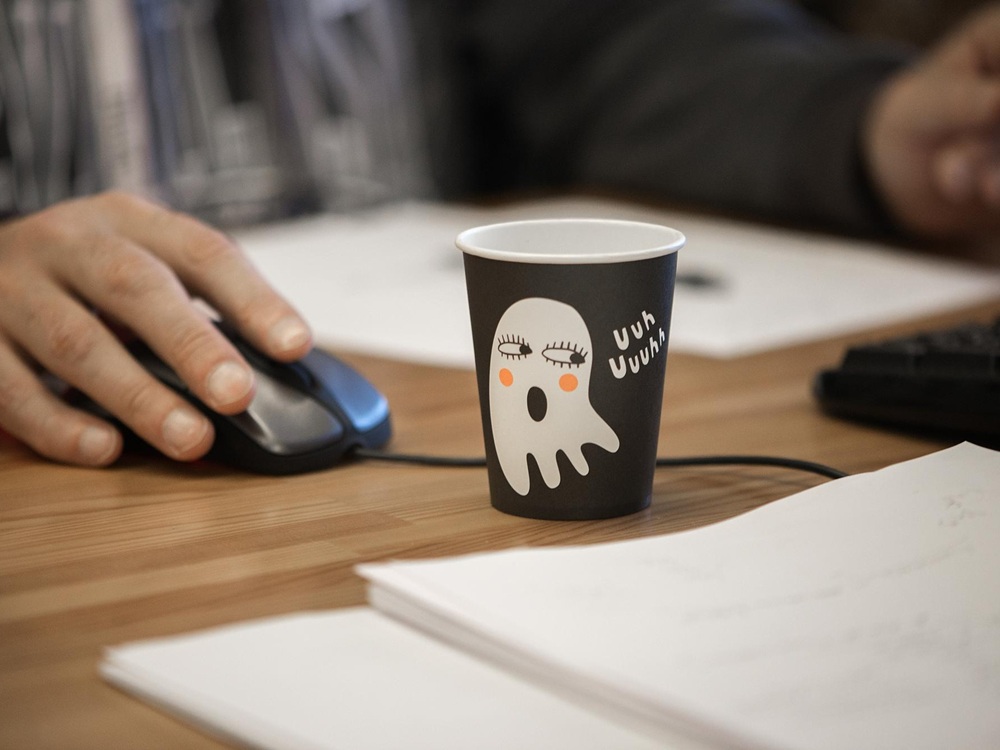
As the new year ticked over at midnight, while many readers were sipping champagne and sharing smooches, a bunch of new rules came into effect in Ontario aimed at improving the hiring process, with new requirements for salary and AI transparency, plus rules that are meant to forbid companies from ghosting interview candidates.
Starting in 2026, companies will be required to post a salary range for each position, with the range capped at $50,000, as well to disclose publicly whether AI will be used in candidate selection. Most exciting to anyone looking for a job might be the rule against ghosting: the new law, believed to be one of the first of its kind, requires companies to follow up with applicants within 45 days of their last interview.
The first two major changes will be relatively easy for companies to implement, even if many will grumble at having to reveal the information. The ban on ghosting will be an interesting one to watch this year, though. “It’s an appropriate starting point, because I think what we’ve got to do is marry the need to provide the prospective employee with closure on their job search, positive or negative, but also work reasonably with organizations that are going to have to make adjustments to their hiring process,” said Deb Bottineau, managing director at Robert Half.
“The fact that we have to legislate that is really sad,” added Moms at Work founder Allison Venditti, calling the widespread trend of ghosting “really bad HR.” Recruiter Tom Sorensen believes the new legislation will likely be a benefit to good companies, and a bane to lazy ones. “Candidates talk. Markets are small. Reputations move fast. For companies that already communicate well, this law will not change much,” he said. “For those who ghost candidates, the days of silence are over.”
But while the intent is noble, questions remain as to whether the spirit of this law is followed, or whether the requirement to inform ends up being met with impersonal automatic emails. And worth watching will be the willingness of Ontario’s labour ministry to show its teeth on this file and be tough with HR departments and recruiters.
On that point, there are doubters. “I don’t think it’s going to help [jobseekers] at all,” said employment lawyer Dave McKechnie, speaking to NOW Magazine. “[The ministry] doesn’t have the bodies to deal with all of these complaints. It is a very nice provision on its face. Everybody would love to know how they did in an interview. I just don’t think it’s going to move the needle one way or the other.”
Vibe check
AI will no doubt continue to grow in 2026, but the industry is starting to sober up

In our end-of-year review in this newsletter, we argued that 2025 was the year where AI technology went from curiosity to ubiquitous presence within today’s offices and workplaces. If you weren’t using an LLM platform or dealing with an enterprise AI tool at the start of 2025, there was certainly a good chance you were doing so by the end of it.
But it wasn’t like we were describing an unstoppable, runaway train dynamic — just a few weeks before, we also wrote about a report from The Economist that suggested adoption rates for AI tech had started to fall. Was it fatigue? Perhaps employee backlash to a technology repeatedly linked with job loss? Had companies started to respond to poor returns on AI investment? Had users come to view the tech’s limitations as a problem?
We’re heading into 2026 with a lot of questions lingering over the AI sector, which has been forced to start responding to concerns of a bubble. If AI is going to become the ubiquitous technology its advocates claim it can be, adoption statistics are going to be important to watch, because they serve as a good proxy for how useful AI will be in generating actual returns.
“The disparity between investment in AI and its actual usage underscores a significant challenge faced by many organizations: the translation of AI capabilities into tangible, everyday business use,” wrote Christoph Müller of Gravity Global. Microsoft, for instance, cut sales target for its AI software, admitting that “almost nobody is using CoPilot,” as tech reporter Jon Martindale put it. “For enterprise leaders who’ve been caught up in the AI transformation narrative, this shift demands serious attention,” Müller said.
One reason to bet on AI growth might be the sheer amount of money companies have invested and their unwillingness to let that go. Many AI projects spent 2025 stuck in pilot purgatory: according to software company Easy Redmine, while three-quarters of organizations use AI in some fashion, only around one per cent of companies say their AI implementation is “mature,” and we may see that number grow over the year.
But there are reasons we could see a retreat, too. The hallucination problem persists, the tech hasn’t won over many skeptics and revenue challenges for tentpole companies like OpenAI are stark.
So, expect 2026 to be a year where ROI is the dominant conversation around AI, which we think will be focused on practicality and actual use more generally. This is probably a good thing — hype, sales pitches and boosterism have spread the word, but it’s also led to a lot of poor AI use (looking at you workslop). “The era of easy gains from AI hype is over,” wrote MarketMinute, “but the era of sustained growth form AI utility has only just begun.”
Oh, alright, we’re still apparently discussing hybrid work
As RTO mandates ramp up for government and financial sector workers, one thing is certain: the talk about where work is being done just won’t go away

Imagine for a moment you are a time traveller visiting from the year 2021. You take life in and say something like, “Things sure are a little weird around here, but hey — we have hybrid work settled, right?”
Ah, nope.
Every year for the past however many, someone makes a prediction that this will be the year we stop caring about where people work. Case in point, The Globe and Mail over this past weekend: “In 2026, companies will offer access to multiple work locations, giving teams more autonomy over when and where they work.”
Sure. Yet here we are, heading full force into the 2026 work year with little settled on hybrid work.
“Canadian workers remain divided,” wrote a summary of a report by 2727 Coworking. “Polling shows roughly 45 to 57 per cent support for retaining a few mandated office days, but a similar share oppose full returns.” People themselves are torn, the report noted. “Teleworkers often have better work-life balance and less commuting stress, but many also crave in-person collaboration for social and developmental benefits.”
It is largely the public sector driving the current RTO push — Ontario civil servants are heading back in five days a week, and the rumour is federal civil servants soon will, too — along with several major banks that upped their in-office mandate to four days.
So, the thing to watch will be whether the private sector follows or shrugs.
Younger and more diverse companies in general haven’t made much noise about RTO for a while, and many organizations have settled into a suitable hybrid arrangement for their given operation. However, if the signal coming from the public sector says it’s acceptable to order everyone back into the office again, we might see more of a push on the private side as well.
Conversely, there are bits and bobs of reports from sectors like professional services and educational administration where organizations had previously mandated everyone back in full-time. In some cases, it appears they simply slide back into a hybrid state without much fanfare. For RTO, it could be that ‘quiet loosening’ becomes a thing in 2026.
Empathy as a competitive advantage
A human revival: Will 2026 redefine work as we know it?

When thinking about what the year ahead might look like for the average professional worker, one story that kept coming to mind to was one we wrote about last summer, when AT&T CEO John Stankey released a memo (a normally inadvisable response to poor results in the annual employee survey, we should add) that garnered a reaction for its frank assessment that loyalty in the workplace between employees and employers was a thing of the past.
The read from many was that workplace loyalty was over. Some found it to be a refreshing (if not all that tactful) assessment of today’s economy of work. Stankey was saying the quiet part out loud, for once. Maybe he was just lashing out at a bad engagement survey, or maybe he was trying to penny-pinch and call it innovation. Or, if workplace loyalty is on the outs, what should we expect work to look like moving forward?
One area to watch in 2026 might be whether we see a collective effort to soften the conflict between management and employees. The field of HR is looking at another year where employees are burned out and feel undervalued — last year, Gallup pegged the disengagement rate at 79 per cent — so some experts are watching for the spread of a more human touch.
“I see a tension forming between operational efficiency and the need for human empathy,” said Kate Field, head of human and social sustainability at the British Standards Institution, which predicts organizations will pull back their use of AI in employee relations. “Using AI to automate management tasks, such as performance reviews or feedback, can make employees feel dehumanized,” she wrote. “That erosion of trust and psychological safety can lead to burnout, anxiety and disengagement.”
The list might not include AT&T, but many companies and managers are still pretty keen to improve employee engagement, so it might be the case that after a rough 2025 for white-collar employees, bosses and managers try to thaw relations.