

Written by: Kieran Delamont, Associate Editor, London Inc. Originally published in WorkLife by London Inc.
A reckoning with reality
Tech giants and monetary leaders boast and bicker about AI at Davos

The annual get-together for the uber-wealthy at Davos wrapped up last week, and while there were a few headline topics — first, the looming threat of war over Greenland; second, Mark Carney’s eulogy for the American-led liberal world order — there was, inevitably, much talk of the role that AI will play in the job market of the future.
What was interesting, judging from the press coverage, is there still isn’t any kind of consensus forming over what AI will do to the job market. There were an expected number of doomsayers — maybe chief among them being the head of the International Monetary Fund, Kristalina Georgieva, who said they expect AI to be “like a tsunami hitting the labour market,” and adding, rather ominously, that “the middle class, inevitably, is going to be affected.” (We’ll leave you to decipher what “affected” means here.)
Dario Amodei, CEO of Anthropic, suggested the software engineering career is six to 12 months from obsolescence. Christy Hoffman, general secretary of the UNI Global Union, said that AI was bound to cause disruption, and that it was “time to come to terms with that disruption,” adding that “we’re not going to stop AI, nor do we want to even try — but we don’t want it to just roll over us.”
For his part, Elon Musk (he participated in the Davos Forum for the first time, having previously described Davos as “extremely boring”), predicted that the popularization of AI and robot technology will bring unprecedented global economic expansion, and ultimately make work unnecessary; he also expects that “by 2030 or 2031, AI will be smarter than the collective wisdom of all humans.”
Still, there were signs that not everyone in the upper crust of the business world is buying the AI hype. ServiceNow CEO Bill McDermott spoke in favour of keeping one’s employees, saying his company has continued to grow through the AI boom. “We lift them, and we shift them,” he said, speaking about how the company has retrained staff in the age of AI. David Sacks, a venture capital who works within the Trump administration, stated the worry about job replacement is overblown, at least based on the current data. (Independent studies have come to more or less that conclusion — that AI has not replaced many jobs yet.)
But possibly the most eye-catching CEO take on AI came from JPMorgan Chase CEO Jamie Dimon, who implored the powers that be (which, to be fair, includes him) to slow their roll on AI. An AI shift that puts millions upon millions of people out of work, he pointed out, doesn’t just create an economic problem, it starts to threaten the social fabric upon which the economy rests.
“If it goes too fast for society, that’s where government and business in a collaborative way should step in together and come up with a way to retrain people,” he said.
Challenged by the moderator as to whether he would support a state ban on AI layoffs, he — somewhat surprisingly — said yes. “We would agree,” he said, “if we have to do that to save society.”
In defence of busywork
While you know it feels terrific to cross off a whopper of a task on your to-do list, it’s not always the heavy lifting that makes you the most productive

While we all still have human, flesh jobs, much of the allure of AI has come from the prospect that it could get rid of the boring busywork. What could be more appealing than eliminating all that soul-draining time spent doing rote tasks?
Maybe all that boring stuff is worth saving, though — and more people are arguing this exact point.
“Workdays without busywork are closer to reality than ever, thanks to artificial intelligence,” wrote The Wall Street Journal’s Callum Borchers. “This sounds great. The catch is that our brains aren’t capable of thinking big thoughts nonstop. And we risk forfeiting the epiphanies that sometimes spring to mind while doing easy, repetitive job functions.”
There are those in the business world who are starting to see this. Borchers quotes Roger Kirkness, CEO of the software firm Convictional, who said he leaves his staff a blank schedule when they come back from vacation, so that they can spend some of that slack time doing busywork and letting the brain warm back up. Executive coach LK Pryzant also told The Wall Street Journal she calls it ‘white space’ on the calendar. “Busywork sounds low-value, but white space sounds creative and it sounds strategic,” she said. “The outcome is the same.”
The core of the argument in defense of busywork comes down to creativity, and the proponents have a point. “A large number of our best product ideas have come from engineers doing the same repetitive data validation work over and over again, where they notice patterns that would lead to larger insight,” said Metaintro founder Lacey Kaelani Dahan, speaking to ZDNET. “Once we eliminated that repetitive task and automated it, we definitely improved automation, but we lost the incidental learning that happens [through] seeing the data.”
And really, is busywork that bad? “Many merely find busywork peaceful,” wrote Lauren Larson in The Verge. “There was nothing stressful about the work. It allowed me to recover my wits in between high-stress incidences of talking to customers.”
In the age of AI, where the expectation is that we shift our resources to more high-level stuff, we’re taking on extra burnout risk and losing space to let our minds wander and discover. “We live in a time when everything from ad-free streaming services to self-driving cars can supposedly liberate us from the mundane,” Borchers opined. “We ought to be careful about ridding ourselves of all boredom, lest we lose our creativity in the process.”
Does your workplace need a ‘crying room’?
A CBC North lawsuit puts the spotlight on how employers manage distress and psychological health
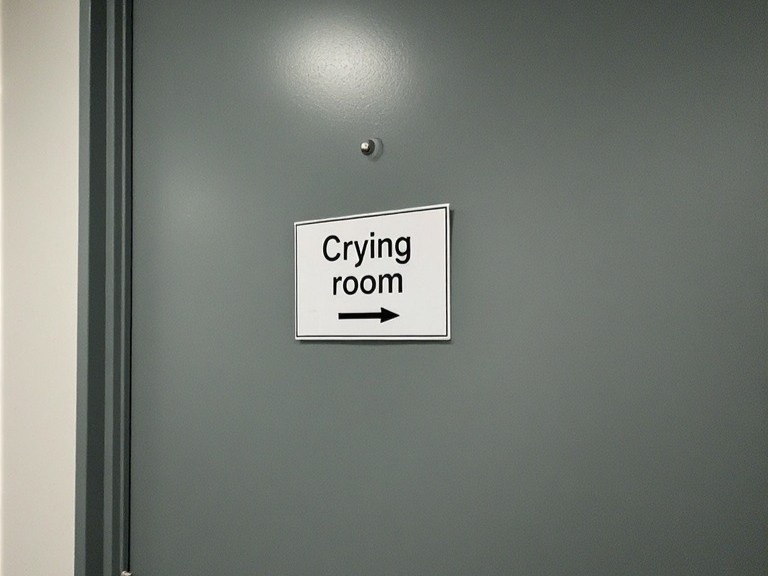
The CBC’s northern bureau found itself at the centre of a toxic workplace complaint earlier this month, after a former human resources employee, Karl Johnston, sued the national broadcaster claiming a host of toxic workplace complaints — including the allegation that things were so bad that management had a designated “crying room” for stressed-out staff.
It is well-known within media circles that the CBC can be a challenging environment (even among the casual-heavy federal service, the CBC is renowned for its heavy use of temporary workers), but the claims of a crying room (untested in court, we should add) was eye-raising. “The fact that there was a crying room, I think, is shocking,” said the lawyer for the plaintiff, Kathryn Marshall, speaking with the National Post. “I’ve never seen anything like that before in any workplace.”
HR experts were equally taken aback. “It’s a major signal that employee stress and distress has become normalized, and psychological safety in the workplace has broken down,” said Edmonton-based HR executive Brianna Madron. “HR can’t frame this as employees not being ‘tough enough.’”
On the one hand, a crying room in your workplace implies a significant amount of crying at work, which is never a good sign. But some, for totally different reasons, have advocated for crying rooms at work. A few years ago, an employment lawyer detailed her belief in the value of crying rooms after realizing she had “cried at work twice” within the span of a year.
“I can see that there probably is a benefit in having a space at work for employees to take a rest, be calm and when they feel like it, have a good cry,” she reasoned.
Psychiatrists have also written that a crying space can be a good idea at some workplaces.
So, know that even crying rooms have their supporters — although the important distinction here seems to be that those workplaces aren’t causing the crying, so it’s hard to see the CBC going with that defence here.
Even the pope is a bad boss
A first-ever Vatican employee satisfaction survey reveals distrust of managers and a workplace lacking initiative and collaboration. Sound familiar?
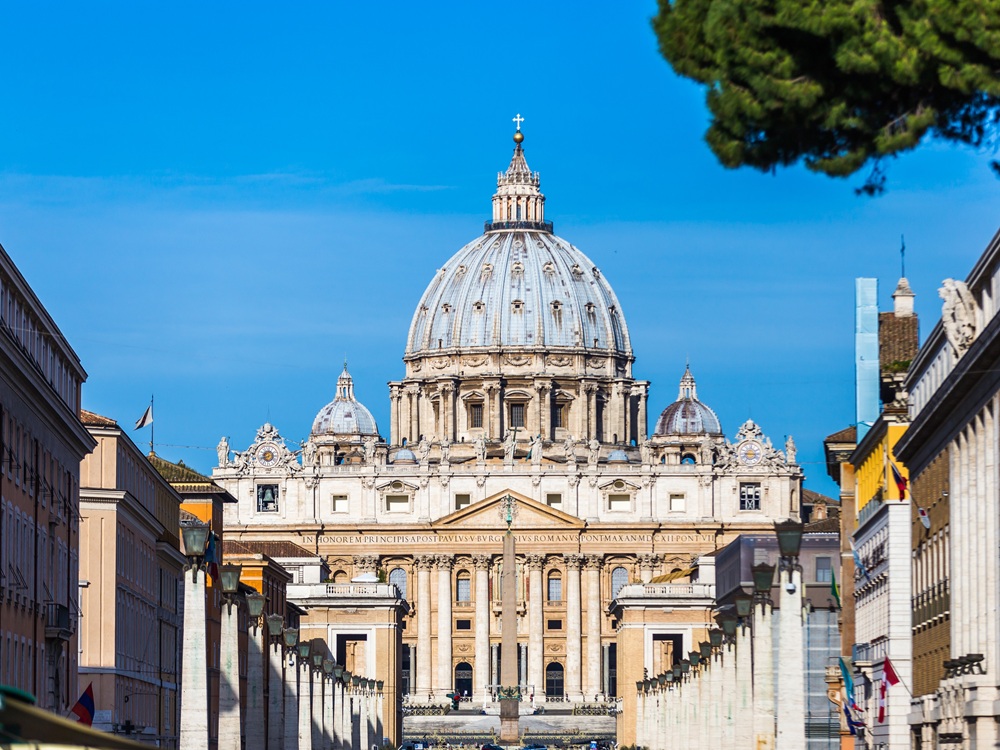
Maybe you’re reading the CBC crying room story and thinking to yourself, ‘Well, it’s bad, but what did they expect, a saint for a boss?’
Alas, it seems the chief of your workplace could be the literal pope, and workplace grievances can still find you: a first-ever internal survey sought to probe the workplace morale of the employees of the Vatican (officially, the Associazione Dipendenti Laici Vaticani) and found that, like the average western marketing firm or corporate office, workplace morale is not so blessed.
What is most surprising about the findings is really how normal they are: 75 per cent of staff claimed that staff are not appropriately placed, valued or motivated, and that their workplace does not reward initiative, merit or experience; more than half (56 per cent) said they witnessed workplace injustices; 26 per cent said they were afraid to speak out due to fear of management reprisal; and 79 per cent said that staff weren’t being adequately trained.
The Vatican, in turn, responded in its own utterly predictable way — by dismissing the concerns as those of disgruntled employees. “It doesn’t seem to me that the discontent is widespread,” said Monsignor Marco Sprizzi, president of the Office of Labor of the Apostolic See. “There are no situations in which employees’ rights are not respected or are violated in any way.”
Perhaps the new boss — Pope Leo XIV — might be able to turn things around. The former Pope Francis, while generally well-regarded as a pope, was also trying to tackle the Vatican’s notoriously shaky finances (tackling financial troubles and grumpy employees are hardly mutually exclusive phenomena). But the whole survey may turn out to be a wake-up call for the Holy See.
“We are like an orchestra in which each instrument must contribute to harmony,” said Sprizzi (holy corporate speak!). “The goal is for this dialogue is to be increasingly constructive and serene, rooted in the light of the Gospel and the social magisterium of the Church, in a spirit of ecclesial communion and effective respect for workers’ rights.”